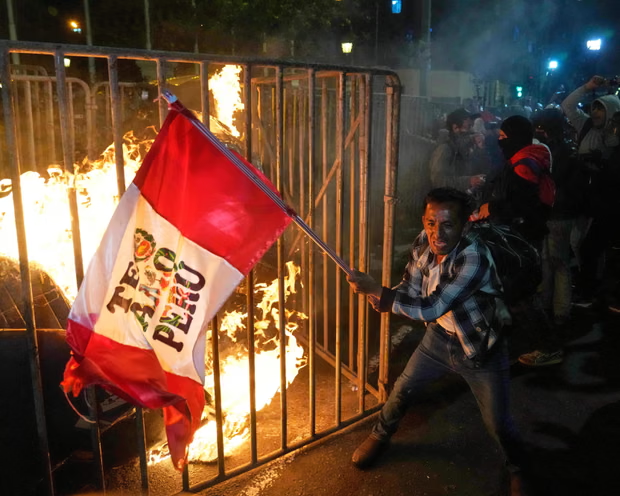
Peru is bracing for a crackdown after street protests against new president José Jerí turned violent, leaving at least one person dead and scores injured.
What happened felt sudden but built on months of anger. Thousands of people young protesters from Gen Z, transport workers and various civic groups poured into the streets across the country and converged outside the congress building in Lima. Tensions rose quickly: protesters threw fireworks, rocks and burning objects, while police responded with teargas. At one point crowds tried to tear down metal barriers around congress and chanted “Everyone must go!”
The cost was human. A 32-year-old man, Eduardo Mauricio Ruiz, was shot and later died; prosecutors say a bullet caused his death and the ombudsman’s office has opened an investigation. Officials say dozens were hurt: 89 police officers and 22 civilians were reported injured, and 11 people were detained.
Prime Minister Ernesto Alvarez said the government will declare a state of emergency in Lima within hours and is preparing a package of measures to try to rein in rising insecurity. After meeting lawmakers to discuss the unrest, President Jerí said he will ask congress for special powers to make laws on public safety one area he says he plans to tackle quickly. He also singled out prison reform as a priority, though he gave few details about what that would mean.
Interior Minister Vicente Tiburcio said the government will push for broader changes to the national police. Officials blamed a mix of factors for the chaos, with Jerí saying on social media that “delinquents” had infiltrated what he called a peaceful demonstration to sow violence. He promised the death of Ruiz would be “objectively” investigated and said those responsible would face the full force of the law.
The protests are a sharp test for Jerí, who has only just taken office and whose presidency runs until next July because of scheduled elections. He has vowed to make fighting crime his top priority, but his early days in power have been shadowed by scandal: he has faced corruption accusations and a now-paused sexual assault probe claims he denies and has said he will cooperate with investigators.
This unrest echoes recent history: mass demonstrations pushed out former president Dina Boluarte last week after months of protests over corruption and public safety. Boluarte’s rise in late 2022 was also followed by large protests and deadly clashes that left dozens dead and left public trust in political institutions at rock-bottom levels. Congress, which Jerí once led, remains deeply unpopular.
For now, Peru enters a tense period. The government moves to assert control, while many citizens make clear they want sweeping change and are willing to take to the streets until they see it.