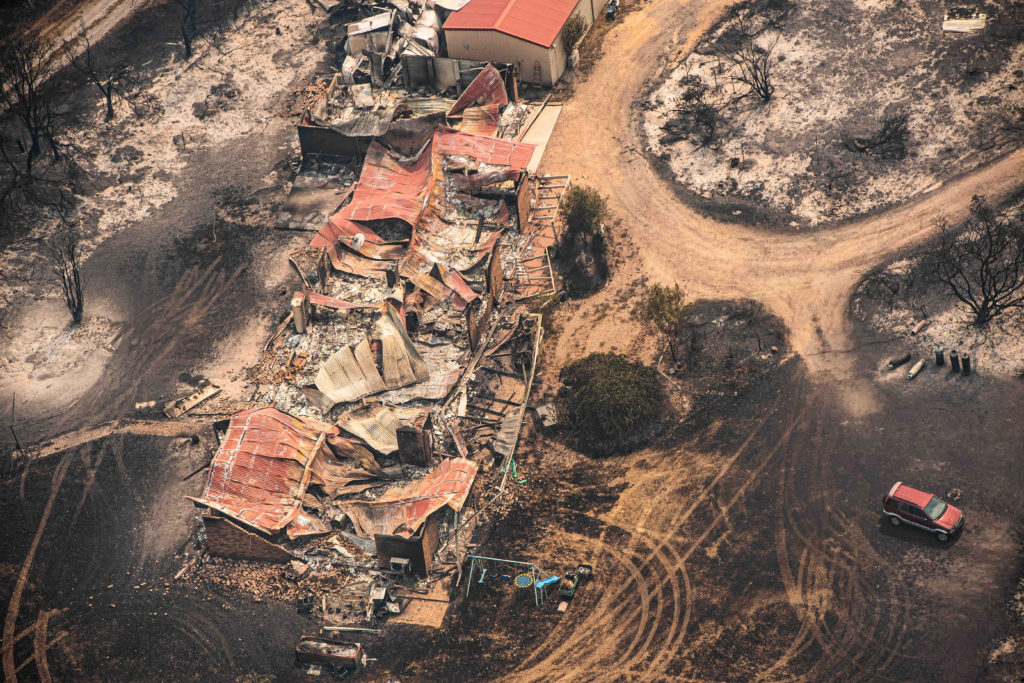
Deadly bushfires are ripping through south-eastern Australia, leaving a trail of destruction and heartbreak behind. At least one person has died, and around 300 homes have been reduced to ashes as flames continue to spread across Victoria and parts of New South Wales.
The fires have been burning for days, tearing through an area almost twice the size of Greater London. In Victoria, the situation has become so serious that the government has declared a state of emergency. Thousands of firefighters and more than 70 aircraft are working nonstop to contain the flames, while residents in over a dozen towns have been told to evacuate for their safety.
Hot, dry weather and strong winds are making the fires extremely difficult to control. Officials warn the blazes could keep burning for weeks. Victoria’s Premier, Jacinta Allan, said around 30 fires are still active, with 10 of them posing a major threat to homes and communities. By Sunday morning, about 350,000 hectares of land had already been scorched.
“This is far from over,” Allan said. “There are still fires burning right now that are putting people and property at risk.”
Tragedy struck in the small village of Gobur, near Longwood, where police found human remains in the fire zone. The victim has not yet been identified. The premier praised emergency crews for their difficult work in recovering the body, calling it emotionally tough and deeply confronting. “The Gobur community is grieving,” she said.
Read Also: U.K. set to roll back key refugee protections as part of major asylum system overhaul
Thick smoke from the fires is also causing air quality problems across Victoria, including in Melbourne, making it hard for many people to breathe.
Authorities say this is the worst fire season the region has faced since the devastating 2019–2020 bushfires, which killed 33 people and burned an area as large as Turkey. Many more people later suffered health problems from the heavy smoke that blanketed cities and towns.
One of the hardest-hit places is Harcourt, a small town in Victoria’s central highlands. Firefighter Tyrone Rice lost his own home while he was out battling the flames. When he heard the news, he described it as “a kick in the guts,” but said he knew he wasn’t alone in his loss.
Local fire captain Andrew Wilson called the damage “gut-wrenching.”
Journalist Jack Ward, who visited several fire-affected towns for bushfires Australia 9 News, said the destruction was “catastrophic.” In many places, he explained, all that remained of homes were twisted metal roofs lying on the ground.
While it’s difficult to blame any single fire on climate change, experts say rising temperatures and longer dry spells are creating the perfect conditions for more intense and frequent bushfires.
As firefighters continue their dangerous work, communities across Australia are holding on to hope and supporting each other through one of the country’s toughest fire seasons in years.