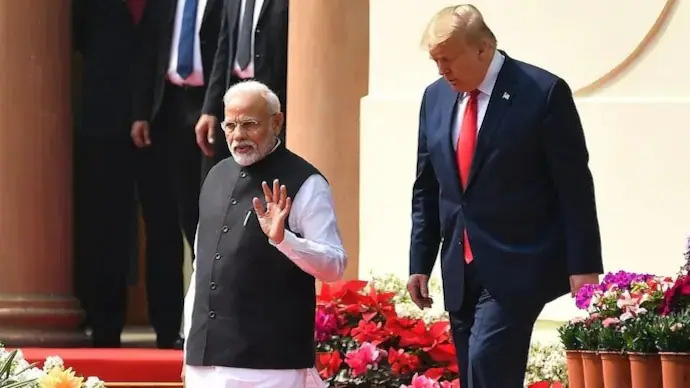
When President Trump said he’d just spoken with Prime Minister Narendra Modi and that Modi had “assured” him India would stop buying oil from Russia, it set off a quick response from New Delhi: that phone call never happened.
India’s Ministry of External Affairs was prompt in pushing back. Spokesperson Randhir Jaiswal told reporters there was no recent conversation between the two leaders. He pointed people to an earlier official statement on the energy issue and made it clear: the prime minister did not speak to President Trump about stopping Russian oil purchases.
Trump had been speaking in the White House about his relationship with Modi, calling him “a great man” and praising India as “an incredible country.” He suggested the two leaders might meet on the sidelines of the upcoming ASEAN summit in Malaysia and said Modi had told him India would phase out buying Russian oil a move Trump said would make it easier to bring an end to the Russia-Ukraine war.
Those comments included this line from Trump: “He assured me today that they will not be buying oil from Russia… You can’t do it immediately it’s a little bit of a process but the process is going to be over with soon.” He went on to introduce the newly appointed U.S. ambassador to India, Sergio Gor, who was sitting in the Oval Office.
New Delhi’s response emphasized that India’s energy choices are made at home, driven by what’s best for Indian consumers and the country’s energy security, not by outside pressure. The MEA spelled out India’s priorities: keeping prices stable and ensuring steady supplies. That’s why India tries to diversify its sources and “broad-base” where it buys energy so it can handle market ups and downs.
The ministry also noted that India has been working to grow energy ties with the United States for years, and that talks to deepen that cooperation are ongoing. In short, New Delhi rejected the idea that a phone call had happened or that its energy policy had been decided at the U.S. president’s urging instead it framed energy decisions as pragmatic steps meant to protect consumers and secure reliable supplies.