It started as a routine storm but quickly became one of the worst disasters the Philippines has faced this year. On Thursday, November 6, 2025, President Ferdinand Marcos Jr. declared a state of emergency after Typhoon Kalmaegi tore through the central islands, leaving hundreds dead or missing and tens of thousands homeless.
Kalmaegi slammed into the region earlier in the week and had passed into the South China Sea by Wednesday, November 5. Officials say the storm affected nearly 2 million people. At least 114 people have been confirmed dead most drowned in sudden flash floods and 127 are still missing, many from the hard-hit province of Cebu. That adds up to roughly 241 people either dead or unaccounted for so far.
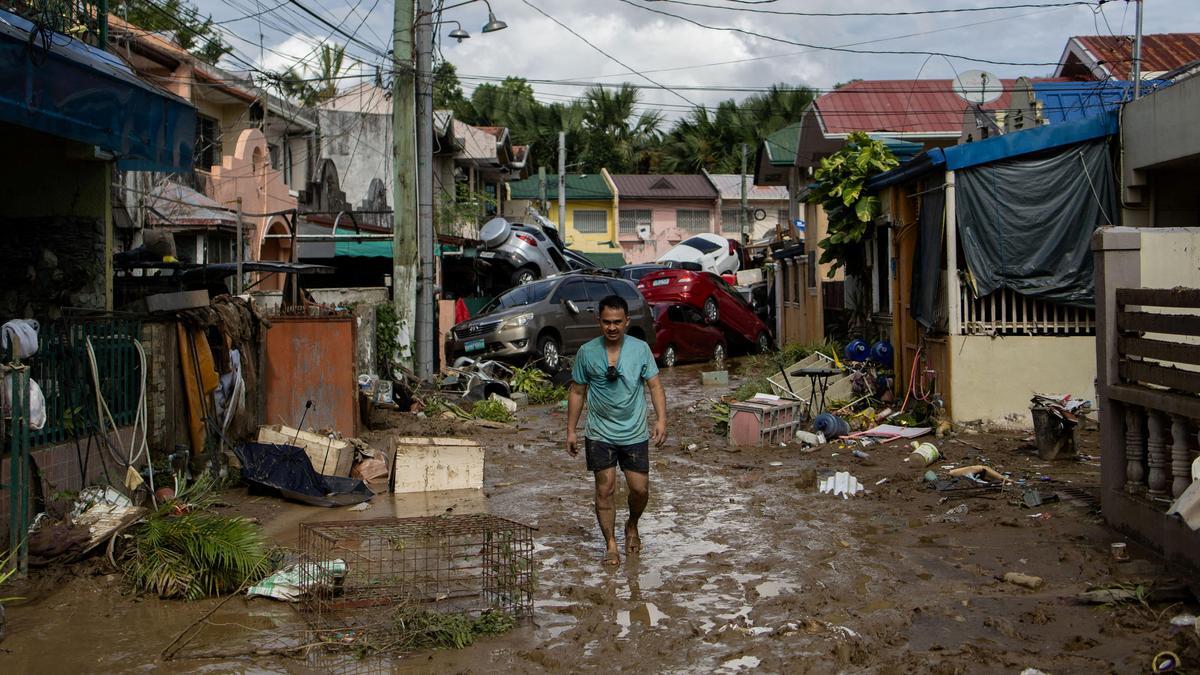
The human cost is heartbreaking. In towns along swollen rivers, water rushed in a matter of minutes, sweeping away cars and homes. People scrambled to climb onto roofs and call for help as rescue teams raced to reach them. Volunteer rescuers described chaotic scenes: SUVs flipped over, houses torn apart, and families clinging to whatever they could find.
Cebu suffered the worst of it. Officials reported at least 49 people drowned there, with more listed as missing. Nearby islands, including Negros Occidental and Negros Oriental, also reported dozens missing. The Philippine Red Cross said many calls came from people trapped on roofs begging to be rescued.
The storm also claimed lives in other, unexpected ways. Six people died when a Philippine air force helicopter crashed in Agusan del Sur while on a mission to deliver aid a tragic blow as crews tried to help the worst-hit areas.
More than half a million people were forced from their homes. Authorities say over 560,000 villagers were displaced, and nearly 450,000 were moved into emergency shelters. To speed relief and prevent panic buying or price gouging, the president’s emergency order lets the government release funds quickly and take other emergency steps.
Locals and officials are also pointing to deeper problems. Many believe years of quarrying, clogged rivers, and poorly built flood-control projects made the flooding worse. Those same shoddy projects have been linked to a wider corruption scandal that has already sparked public anger and protests in recent months.
Cebu had barely recovered from a 6.9-magnitude earthquake on September 30 that killed at least 79 people and left thousands displaced. Some of those people had been moved into sturdier shelters before the typhoon hit, which likely saved lives in parts of the province but the floods still devastated other communities.
Transport and daily life were badly disrupted. Ferries and fishing boats were ordered to stay ashore, stranding more than 3,500 passengers and truck drivers at nearly 100 ports. About 186 domestic flights were canceled. And as Kalmaegi headed west, forecasters warned that central Vietnam and Thailand could see more heavy rain, with Vietnam already reeling from record downpours and landslides.
The Philippines is used to storms about 20 typhoons and tropical storms hit the country each year but Kalmaegi’s speed and the severity of the flooding have left communities reeling and asking tough questions about preparedness and infrastructure.
Rescuers and volunteers are still searching through wreckage, helping survivors, and delivering food and medicine. For many families, the long work of rebuilding is only just beginning.