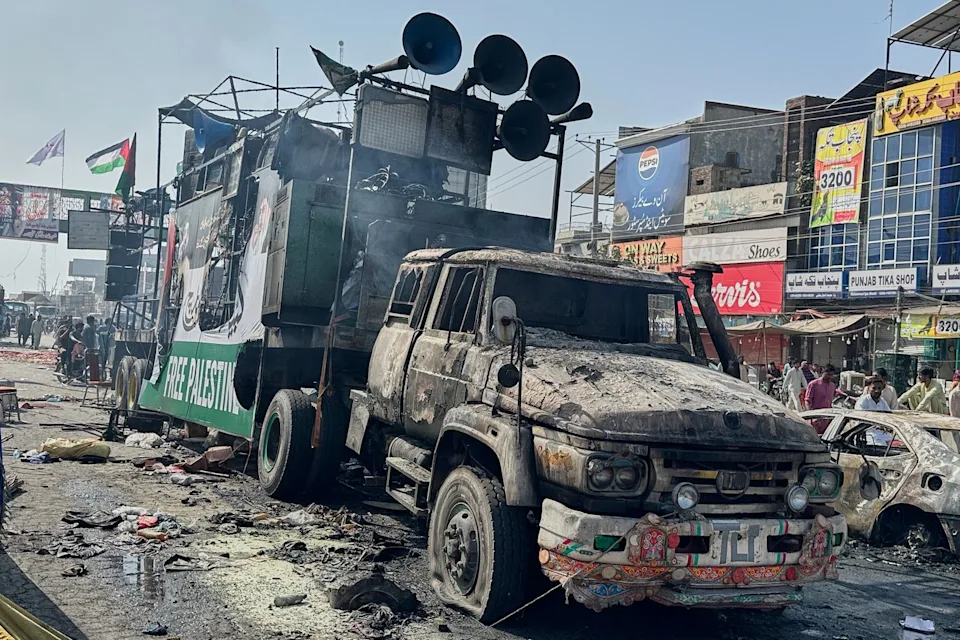
In Lahore, Pakistan, violent clashes erupted on October 13 as authorities attempted to disperse a pro-Palestinian march. The confrontation left at least five people dead including a police officer-and dozens more injured among law enforcement personnel, according to officials and witnesses.
The march was led by the Islamist political party Tehreek-e-Labbaik Pakistan (TLP). It began in Lahore with the stated goal of proceeding to Islamabad to stage a demonstration outside the U.S. Embassy in solidarity with Palestinians. Authorities had placed barriers and deployed police to block the procession.
Violence escalated as protesters attempted to remove shipping containers placed on main roads by security forces. Punjab Police Chief Usman Anwar said some demonstrators opened fire on officers, killing one and injuring several. In response, police used force to disperse the crowd. Officials reported that among the dead were three protesters and one civilian passerby, in addition to the officer.
TLP claimed that hundreds of its supporters sustained injuries and released footage showing burning vehicles, including a truck carrying party leaders. The party said its leader, Saad Rizvi, was wounded during the clashes and called for an end to the violence, urging security forces to halt fire.
Throughout the weekend leading up to the clash, tensions had been rising in Lahore. Authorities earlier arrested over 100 TLP supporters during clashes, using tear gas, batons, and rubber bullets. Protesters responded by throwing stones and damaging public property. In many parts of the city, schools were closed and mobile internet services were suspended in a bid to limit escalation.
Punjab police confirmed that officers sustained significant injuries during the confrontations. One source reported that over 100 law enforcement personnel required medical attention following the clashes.
TLP’s march, branded the “Labbaik Ya Aqsa” protest, is part of a broader wave of demonstrations in Pakistan expressing solidarity with Palestinians amid the ongoing Israel–Hamas conflict. The party has a history of staging highly mobilized and sometimes confrontational protests, especially on issues it frames as religious or symbolic.
The government, on its part, warned against any attempt to create chaos or destabilization under the guise of expressing solidarity. Statements from senior officials questioned why the march was being held at this time, noting that recent ceasefire efforts in Gaza rendered large-scale demonstrations less justified.
With the capital locked down and roads sealed, the march never reached Islamabad. Security measures remain tight, and authorities are reportedly searching neighborhoods to locate protest organizers and participants.
This latest confrontation underscores deep political and social tensions in Pakistan, where foreign policy issues—especially relating to Palestine-can rapidly become flashpoints in domestic politics. The severity of the clash also raises questions about law enforcement responses, rights to protest, and the risks of escalating violence in an already volatile environment.