A tragic train accident has shaken southern Mexico after a passenger train derailed in the state of Oaxaca, leaving at least 13 people dead and nearly 100 others hurt.
The train was traveling across the country, linking the Gulf of Mexico with the Pacific Ocean, when it suddenly jumped the tracks while rounding a curve near the small town of Nizanda. On board were 241 passengers and nine crew members, many of whom were enjoying what was meant to be a routine journey.
Mexico’s navy, which runs the national railway system, confirmed that 98 people were injured in the crash. Of those, 36 were taken to hospitals for treatment. President Claudia Sheinbaum said that five of the injured are in serious condition. She also announced that senior government officials, including the navy secretary, were heading to the crash site to oversee the response.
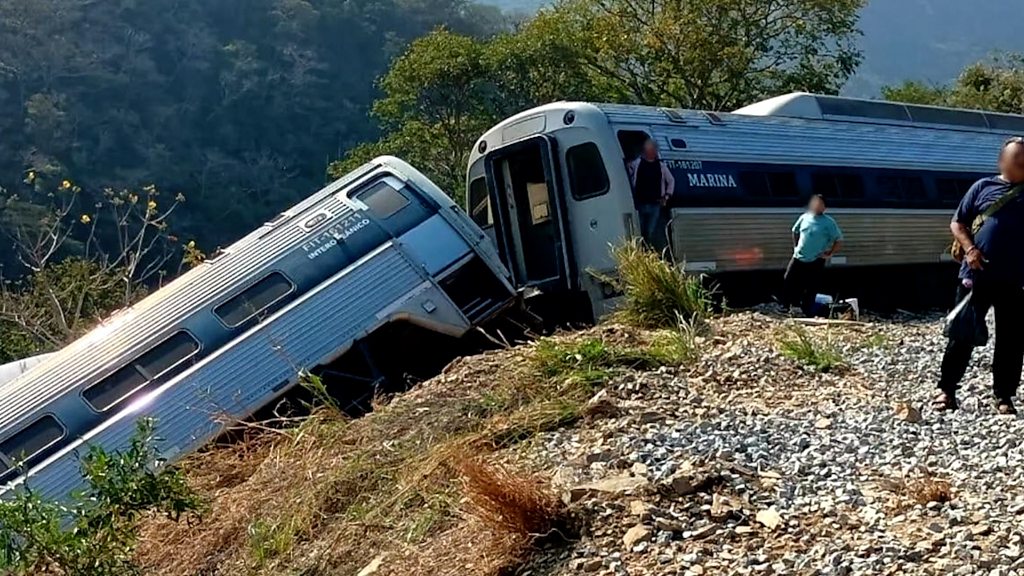
Photos from the scene showed a frightening aftermath. Rescue workers helped shaken passengers climb out of train cars that had slid off the tracks and tilted dangerously along a cliff. Emergency teams worked quickly to assist survivors and secure the area.
The train involved was part of the Interoceanic rail line, which connects the Pacific port city of Salina Cruz with Coatzacoalcos on the Gulf Coast. It consisted of two locomotives and four passenger cars. The line was launched two years ago as part of a major government effort to boost the local economy and improve transport across the Isthmus of Tehuantepec.
Oaxaca’s governor, Salomón Jara Cruz, expressed deep sorrow over the incident and said state authorities are working closely with federal agencies to support victims and their families. Mexico’s attorney general has confirmed that an official investigation is underway to determine what caused the derailment.
The Interoceanic rail project was designed to turn the region into a key trade route, with expanded ports, railways, and industrial zones. It is also part of a wider plan to bring back passenger and freight rail services in southern Mexico and create new economic opportunities. For now, however, the focus remains on rescue efforts, medical care, and finding answers after this devastating accident.