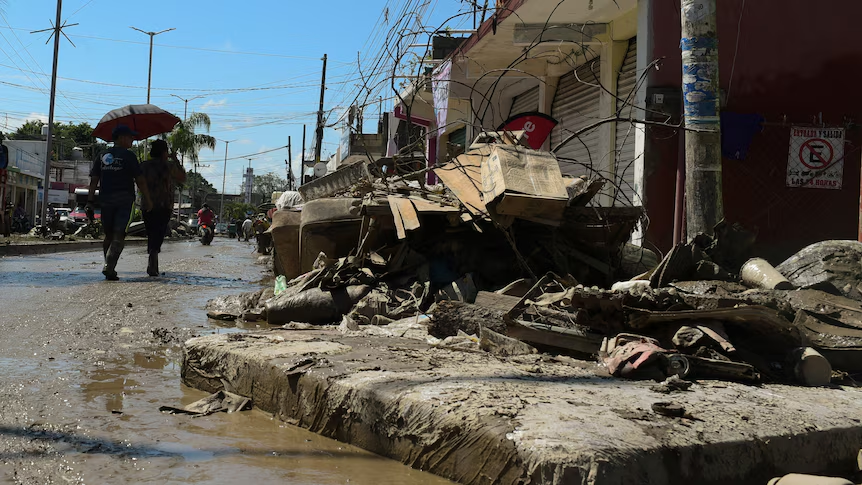
Mexico is facing one of its deadliest weather disasters in recent years after days of torrential rains triggered severe flooding and landslides across several regions. At least 64 people have been confirmed dead and dozens remain missing as emergency services continue rescue operations.
The heaviest rainfall hit the central and coastal states of Veracruz, Hidalgo, Puebla, and Querétaro, where rivers overflowed and entire neighborhoods were submerged. Veracruz suffered the greatest losses, with at least 29 deaths and 18 people unaccounted for, while Hidalgo reported 21 fatalities and 43 missing. Officials have warned that the death toll could rise as search operations continue in remote areas.
The intense downpours were caused by a tropical depression that intensified unexpectedly near the end of Mexico rainy season. Meteorologists noted that saturated soil conditions from previous storms, including Hurricane Priscilla and Tropical Storm Raymond, worsened the impact, leading to widespread landslides and flash floods.
More than 100,000 homes have been affected nationwide, with entire communities losing access to electricity and clean water. Roads and bridges have been washed away, isolating several towns. In the city of Poza Rica, floodwaters mixed with industrial runoff and oil residues, complicating cleanup efforts and raising environmental concerns.
The federal government has deployed over 10,000 soldiers and emergency personnel to assist in rescue and relief operations. Helicopters are being used to deliver food, medical aid, and evacuate residents trapped by rising waters. President Claudia Sheinbaum said the government would provide full support to affected families and ensure that recovery efforts reach all impacted areas.
Public health officials have warned that stagnant floodwaters could lead to outbreaks of waterborne diseases and mosquito-borne illnesses such as dengue fever. Hospitals and emergency shelters in several states are operating beyond capacity as displaced residents seek refuge.
Rescue teams continue to work around the clock to locate missing persons while restoring vital infrastructure, including power lines and communication networks. Damage assessments are underway, and officials estimate that full recovery could take months.
This disaster highlights Mexico’s growing vulnerability to extreme weather events linked to climate change. Experts have warned that warming ocean temperatures are making tropical storms more unpredictable and destructive, posing new challenges for infrastructure and disaster preparedness across the region.