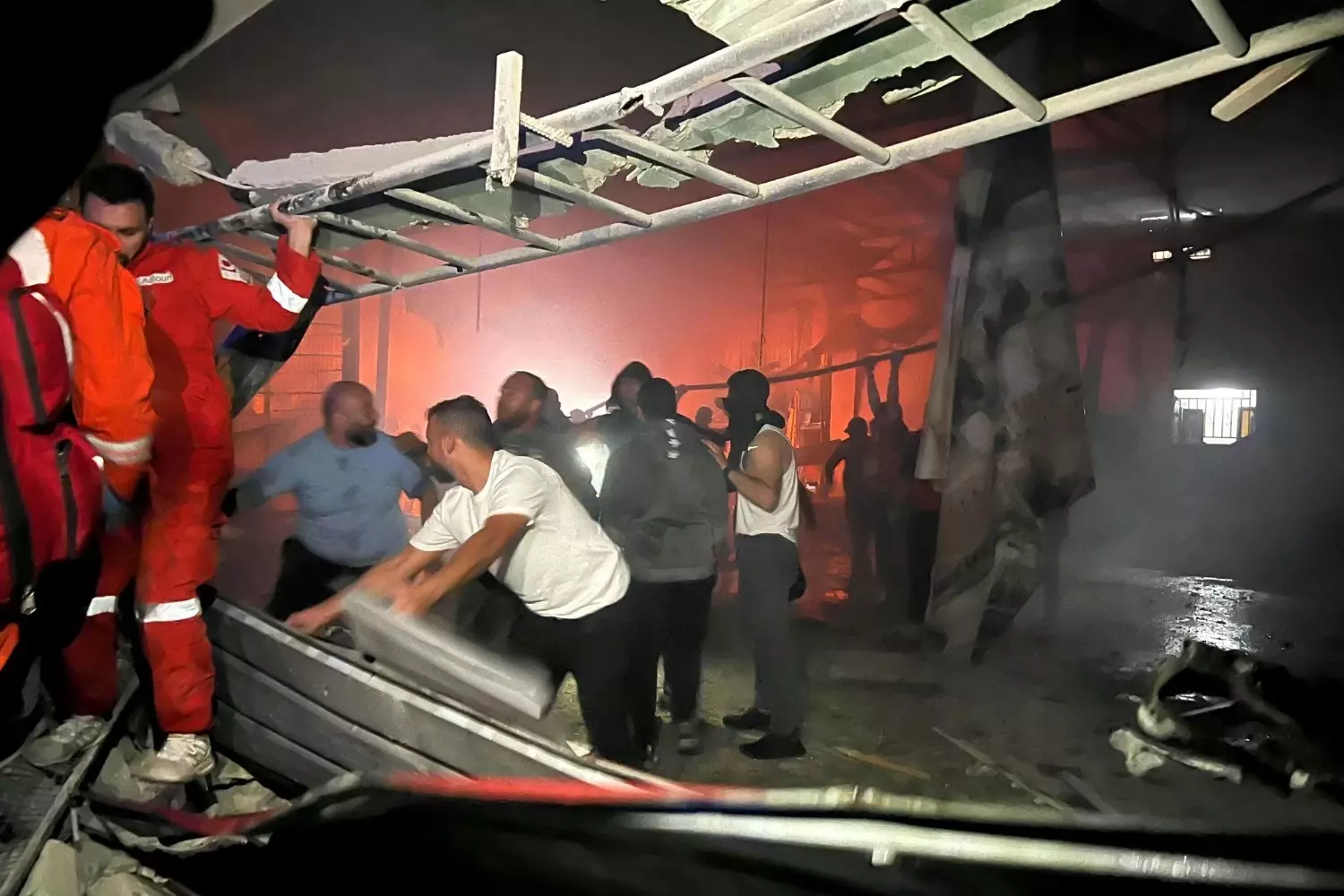
A night of violence in southern Lebanon left at least 13 people dead after an Israeli strike hit the crowded Ain al-Helweh Palestinian refugee camp near Sidon, officials said. Ambulances rushed into the camp as firefighters battled a blaze and rescuers pulled wounded people from the rubble and the streets.
Lebanese health authorities reported the toll and said more injured were still being taken to hospitals. An AFP reporter at the scene described chaotic rescue efforts, with gunmen firing into the air to clear paths for ambulances while medics worked to reach the injured. Witnesses said the blast struck near a parking area close to the Khalid bin al-Walid mosque; some accounts said the mosque itself and a nearby community centre were also hit, though an on-the-ground reporter did not see visible damage to the mosque.
Israel said it had targeted a Hamas training compound in the camp, releasing footage of a strike on a building and saying it was acting against Hamas’s presence in Lebanon. Hamas strongly denied the claim, calling the attack a “brutal assault” and insisting there are no military installations inside the Palestinian camps. The group said those hit were youths on a sports field, not fighters an allegation that offered a deeply different picture of what happened.
Ain al-Helweh is Lebanon’s largest Palestinian camp and home to hundreds of thousands of refugees. By long custom, the Lebanese army usually leaves security inside these camps to Palestinian groups, a hands-off approach that has complicated efforts to disarm armed factions. In recent months, Beirut has tried to push back on militia arms under pressure from the United States and others, and some smaller factions in the camp have handed over weapons but Hamas has not agreed to do so.
The strike comes amid a history of tit-for-tat violence. Since the Gaza war reignited in October 2023, Hezbollah and Israeli forces have traded strikes across the border at times, and Israel has in the past targeted operatives from both Hezbollah and Hamas inside Lebanon. Earlier on Tuesday, Lebanon said other strikes in the south killed two more people.
The episode highlights the fragile reality along Israel’s northern front: one strike can quickly swell into wider unrest, and the lines between military targets and civilian areas are often blurred in densely packed camps. Unifil and other observers have warned that such incidents risk dragging the wider region back into heavier fighting.
For families in Ain al-Helweh and across Lebanon, the immediate need is simple and urgent medical help, safe passage for the wounded, and answers about who was killed and why. For diplomats and military planners, the bigger questions remain: how to prevent more cross-border attacks, how to disarm armed groups inside the camps, and how to keep a shaky calm from collapsing into a larger war.