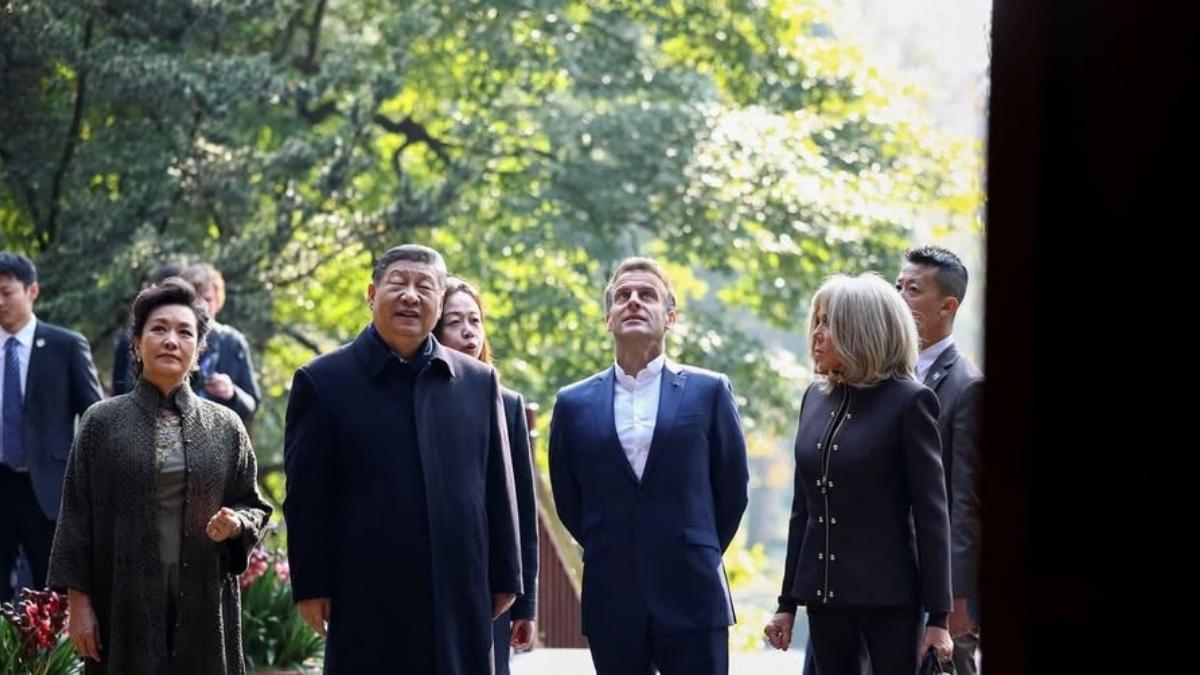
French President Emmanuel Macron’s latest visit to China delivered strong visuals, warm diplomacy, and a rare personal tour from Chinese President Xi Jinping but fell short of producing any significant economic or commercial breakthroughs. The three-day trip, ending in Chengdu, highlighted China’s strategic charm offensive toward France, even as Beijing held back on major concessions.
READ:- Miley Cyrus announces engagement to longtime partner Maxx Morando
Xi’s decision to personally accompany Macron outside Beijing stood out. The leaders walked through Jincheng Lake Park, greeted morning joggers, and visited the UNESCO listed Dujiangyan irrigation project. This level of personal engagement is unusual in Chinese diplomacy and signaled that Beijing wants to elevate its relationship with Paris at a time when EU-China ties remain tense.
However, beneath the cordial optics, the trip delivered limited economic results. Both leaders oversaw the signing of 12 cooperation agreements related to nuclear research, artificial intelligence, panda conservation, ageing population programs, and sanitary trade standards. While diplomatically symbolic, these agreements lack the immediate economic impact France was hoping for.
Missing from the visit were the much-anticipated “big wins”:
- No large Airbus jet order despite months of speculation.
- No clear progress on French agricultural exports including pork and cognac.
- No major investment or industrial deals that could bolster France’s economic position.
Analysts note that China’s restraint appears intentional. With ongoing tensions over EU tariffs on Chinese electric vehicles, stalled trade negotiations, and U.S. China competition affecting global supply chains, Beijing seems unwilling to offer major concessions that could weaken its leverage. The VIP treatment for Macron showcased goodwill but not enough to shift China’s strategic calculus.
For Macron, the visit helped reassert his global diplomatic profile after a turbulent political year. It also allowed him to push for balanced trade, climate cooperation, and a stronger voice for Europe in global governance. Yet the absence of meaningful economic gains raises questions about how much influence France truly holds over Beijing’s long-term priorities.
Ultimately, the visit reflects the current state of China–EU relations: warm gestures, strategic symbolism, and carefully curated diplomacy but limited practical progress where it matters most.