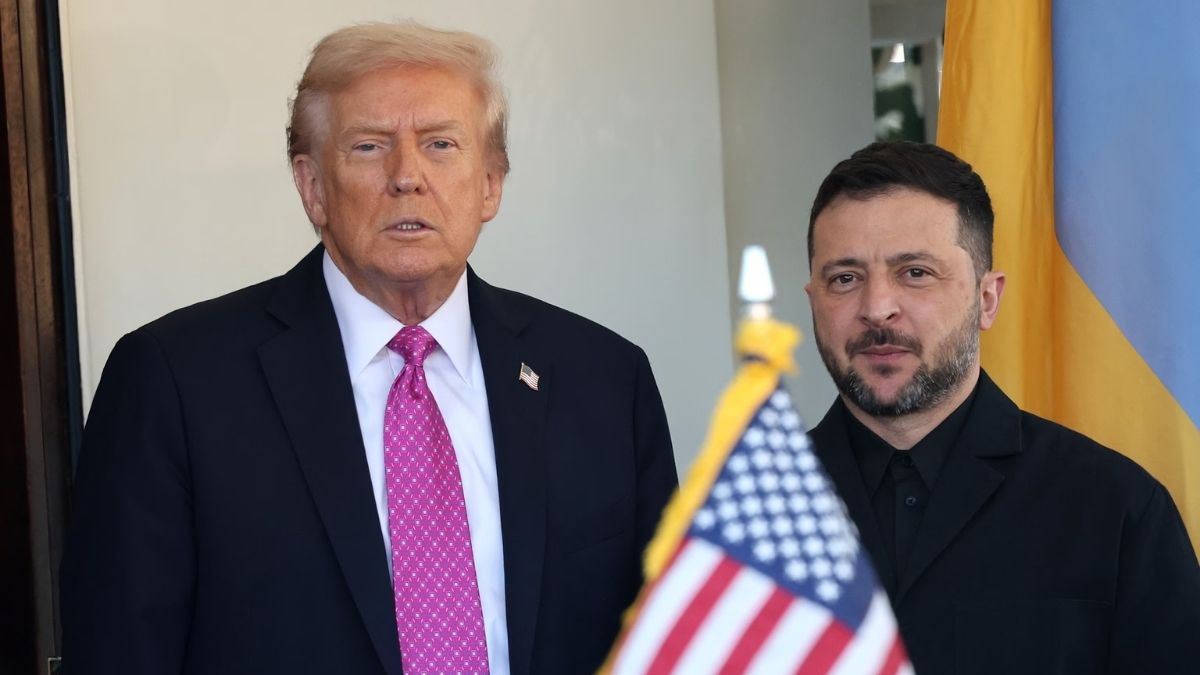
President Donald Trump’s ambitious push to end the war in Ukraine has encountered significant resistance from Russian President Vladimir Putin, with talks between American officials and the Russian leader in Moscow failing to achieve major breakthroughs.
READ:- Israel to release 2,000 Palestinians in exchange for 20 hostages
The High-Stakes Moscow Talks
Trump’s special envoy Steve Witkoff and son-in-law Jared Kushner spent five hours meeting with Putin at the Kremlin, attempting to broker a peace deal that the president had promised to deliver quickly. Trump acknowledged the path ahead remains unclear, describing the discussions as “reasonably good” but noting that progress requires both parties’ cooperation.
The American delegation presented a comprehensive proposal aimed at ending the nearly four-year conflict, but Putin’s response demonstrated Moscow’s unwillingness to compromise on key territorial and security demands.
What’s Actually in Trump’s Peace Plan?
Trump’s Ukraine peace effort centers around a controversial 28-point proposal that has drawn criticism from European allies and Ukrainian officials. The plan reportedly includes provisions that would require Ukraine to make substantial concessions, including territorial losses and restrictions on future NATO membership.
The proposal was developed outside traditional Washington diplomatic channels, without input from experts who typically shape U.S. foreign policy on such matters.
Why Putin Keeps Saying “No”
Despite weeks of pressure on Ukraine to extract concessions that could be offered to Putin, the Kremlin remains unwilling to compromise on critical issues including territorial control and Ukraine’s future political status.
Putin’s hardline stance isn’t surprising to analysts who’ve been tracking Russia’s war objectives. The Kremlin has responded to Trump’s overtures by ruling out major concessions and signaling that Moscow remains focused on maximalist invasion goals.
Russia’s recent actions suggest peace isn’t the priority—including a new decree calling for intensified efforts to erase Ukrainian identity in occupied territories.
Ukraine’s Response: Standing Firm
Ukrainian President Volodymyr Zelenskyy has made clear his country won’t simply accept whatever terms are put forward. Zelenskyy ruled out surrendering captured territory and emphasized that dignified peace is only possible by accounting for Ukraine’s interests.
Ukraine’s negotiators are preparing to meet with Trump’s team in the United States, keeping diplomatic channels open while maintaining red lines on sovereignty and territorial integrity.
Europe Watches Nervously
European allies have expressed alarm at elements of Trump’s peace plan, particularly provisions that appear to favor Russian demands. There are growing concerns that Trump’s desire to end the war quickly could lead to an agreement that undermines Ukraine’s long-term security.
NATO Secretary General Mark Rutte acknowledged Trump as uniquely positioned to break the diplomatic deadlock, noting the president’s continued engagement since February.
What Happens Next?
Trump’s Ukraine peace effort faces a critical juncture. The president confronts difficult choices: pressure Ukraine for additional concessions, potentially walk away from negotiations, or continue seeking a diplomatic breakthrough despite Putin’s resistance.
Ukrainian officials will meet with Trump’s representatives in the coming days, while NATO foreign ministers coordinate on ensuring any eventual peace deal preserves Ukraine’s sovereignty.
The clock is ticking, but Putin holds significant leverage—and shows no signs of budging from his demands.
Bottom Line: Trump’s Ukraine peace effort has produced diplomatic activity but no concrete results. Putin’s rejection of the latest proposals demonstrates that ending this war won’t be as simple as the president initially promised. Ukraine remains caught between American pressure to negotiate and Russian demands for surrender.