More than 900 people have now died after a fierce run of floods and landslides tore through parts of South and Southeast Asia, leaving whole towns buried in mud, families homeless and rescue teams racing against time.
A powerful mix of heavy monsoon rains and a tropical storm Cyclone Ditwah hammered Sri Lanka, Indonesia and Thailand over the last few days, swelling rivers, triggering sudden landslides and washing away roads and houses.
Sri Lanka: the island’s worst disaster since 2004
Sri Lanka reported the sharpest rise in casualties. Officials said at least 334 people have died there and thousands have been forced from their homes the worst natural disaster on the island since the 2004 tsunami. Large parts of the capital, Colombo, remain underwater and entire neighbourhoods are cut off.
President Anura Kumara Dissanayake declared a state of emergency and promised a big rebuilding effort with international help. “We are facing the largest and most challenging natural disaster in our history,” he told the nation.
Rescue workers are still clearing roads from mud and fallen trees to reach trapped communities. In central areas, locals described scenes of devastation as boulders, broken trees and mud swept down hillsides. One resident said she had never seen water volumes like this before; another described watching boulders roll past her home and bury nearby land.
Indonesia: hundreds dead, many areas still unreachable
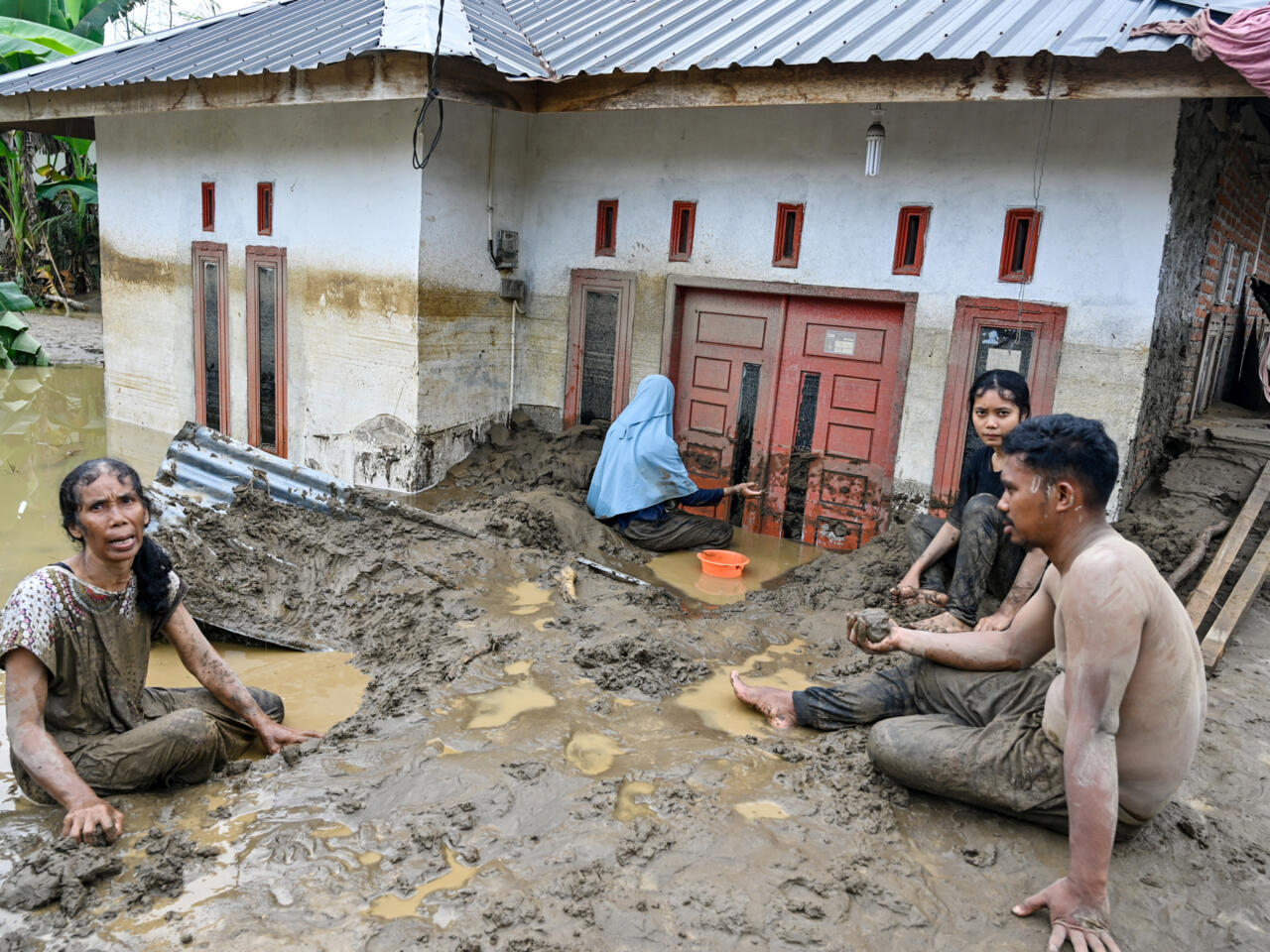
Indonesia toll rose above 442 deaths, with about 402 people missing in hard-hit parts of Sumatra. Rescuers struggled to reach towns where roads are gone and communications are down. In the city of Padang and surrounding areas, residents returned to find houses and shops wiped out, coated in thick grey mud.
“We fled when the water rose. When we came back, the house was gone,” said Afrianti, a 41-year-old survivor sheltering beside what remained of her wall. In remote districts, authorities had to deploy navy ships to bring food and supplies because heavy equipment and land routes were unusable.
Videos and social posts from the scene showed panicked people wading through deep water to reach stores and grab food and medicine. In some places, looting was reported before organized aid arrived.
Thailand: one of the worst floods in a decade
Thailand confirmed at least 162 deaths as whole districts were battered by floodwater and landslides. The government rolled out compensation for families who lost loved ones, but criticism grew over the response in some province two local officials were suspended over alleged failings in flood preparations and relief.
A changing pattern of storms
Meteorologists and aid workers say the severity and timing of these storms reflect how climate change is shifting weather patterns making some monsoon seasons heavier and more destructive than in the past. Officials warned that the season’s unusual intensity, combined with local factors like blocked rivers and damaged flood-control works, made the impact worse.
Human stories and urgent needs
Across all three countries, survivors are now focused on the basics: shelter, clean water, food and medical care. In Sri Lanka, around 148,000 people have been moved to temporary shelters. In Sumatra, villages are still waiting for outside help while families pick through mud and rubble for anything salvageable.
Authorities in the region are asking for international assistance as they try to clear highways, reopen hospitals and trace thousands of missing people. The full scale of damage will only become clear as floodwaters fall and rescue teams can get into previously inaccessible areas.
For now, the immediate task is simple and urgent: get food, water and medical help to survivors, keep them safe from further landslides and begin the enormous job of rebuilding communities that were swept away in a matter of hours.