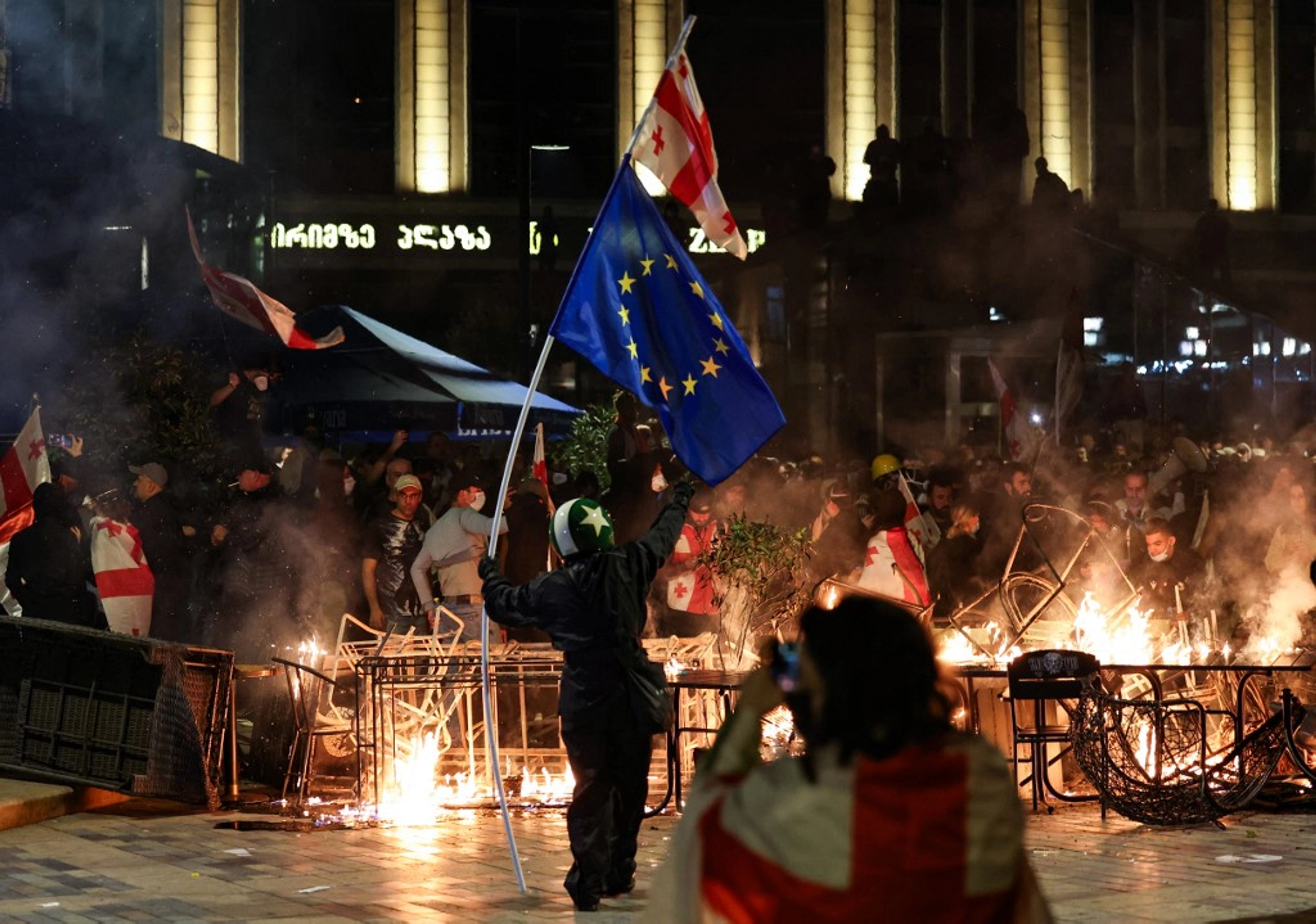
Protests persisted into a second day in Georgia following local elections that opposition groups say were rigged. The ruling party, known as “Georgian Dream,” claims it secured victories in all municipalities, but many opposition blocs had boycotted the polls in protest.
On Sunday, thousands gathered in Tbilisi, clashing with police and burning barricades in the capital’s central areas. The ruling party accused protesters of attempting to “overthrow the constitutional order,” alleging foreign interference. It singled out the European Union’s ambassador to Georgia, claiming that continued civic gatherings would be treated as attempts to subvert the government.
In a startling move, Georgia’s State Security Service announced that it had discovered a cache of weapons, ammunition, explosives, and a detonator hidden in the forests outside Tbilisi. Authorities claimed these were intended for “subversive acts” during the protests, though they did not present detailed evidence.
Western officials reacted swiftly. The EU’s top diplomat and its enlargement commissioner publicly rejected claims that the EU had played a destabilizing role, condemning what they called disinformation and personal attacks on the EU’s ambassador. They urged restraint and respect for democratic rights.
Georgia’s election took place in a climate of tension, with critics accusing the government of cracking down on dissent. The opposition, accusing the ruling party of authoritarian tendencies, has held mass demonstrations since the previous parliamentary election, which it claims was also marred by irregularities.
Once lauded as one of the region’s most pro-Western nations after the fall of the Soviet Union, Georgia’s relationship with Europe has grown more strained in recent years, especially following Russia’s full-scale invasion of Ukraine.
Observers caution that the government’s response to the protests will be closely watched. The discovery of arms raises serious questions about escalation, and how Georgia handles the unrest could further affect its international standing and path toward EU integration.