Something big – and unsettling just surfaced from the White House. President Donald Trump has confirmed he gave the CIA permission to carry out covert operations tied to Venezuela, and that news has stirred outrage in Caracas and alarm across the region.
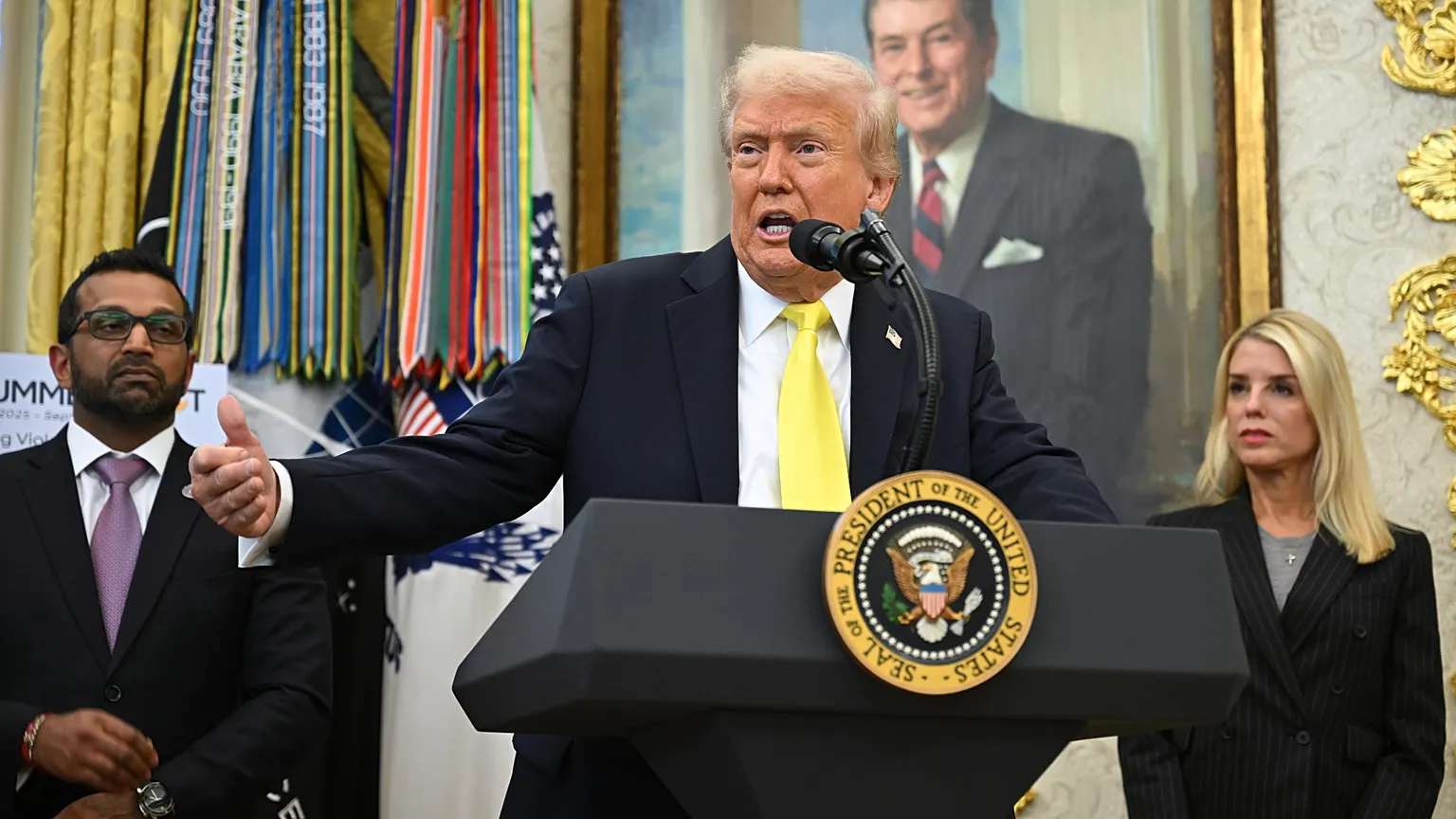
Trump made the admission at the White House while flanked by FBI Director Kash Patel and Attorney General Pam Bondi. When a reporter asked why he authorised the agency to act inside Venezuela, Trump gave two blunt reasons: he said Venezuela had “emptied their prisons into the United States” and that a lot of drugs were coming through Venezuela -much of it by sea. He added that the US was also “looking at land” for future anti-drug actions.
That confirmation follows a string of recent US strikes at sea. In the past few weeks, US forces have hit at least five boats in the Caribbean that were suspected of carrying narcotics. Officials say those strikes killed 27 people in total; in the most recent attack, six people were killed after a vessel was targeted near Venezuela’s coast. US authorities have said those vessels were tied to drug-trafficking networks, but they have not named the groups involved or the people on board. United Nations–appointed human rights experts have called the raids “extrajudicial executions.”
News reports have suggested Trump’s authorisation would let the CIA carry out operations inside Venezuela either on its own or as part of broader US military moves. It’s not clear whether the CIA already has active plans on Venezuelan soil or if these are contingency options. The agency does have a long track record of secret activity in parts of Latin America, which is why this kind of announcement is unusual and sensitive.
Venezuela’s government reacted angrily. President Nicolás Maduro whose own hold on power is disputed after contested elections last year appealed for calm on television but warned against escalation. He urged no regime change and accused the US of plotting coups. Venezuela’s foreign minister described the US statements and military posture as a policy of aggression and harassment.
The Venezuelan president also ordered military exercises and mobilised the armed forces, police and civilian militias in and around Caracas. Those moves reflect how nervous officials in Caracas are about the growing US presence nearby: the White House has sent eight warships, a nuclear-powered submarine and fighter jets to the Caribbean, saying the deployments are meant to crack down on drug smuggling.
The US has also leaned into a tougher legal posture. A leaked memo to lawmakers said the administration views its actions as part of a “non-international armed conflict” with drug-trafficking organisations — language that signals a serious escalation in how Washington frames the fight.
US officials have accused Maduro of being linked to a drug network known as the “Cartel of the Suns,” a claim Maduro denies. The US has previously placed a $50 million reward on Maduro’s head.
The discussion about covert CIA operations has drawn scrutiny from former intelligence and defence officials. Mick Mulroy, a former CIA paramilitary officer and defence official, explained that covert action by the CIA typically requires a formal presidential finding that outlines the authorised actions. He said such a finding would mark a notable ramp-up in US efforts against drug networks. Mulroy compared the idea to a plotline from a film about clandestine operations, suggesting the step would be a major intensification.
For now, many questions remain unanswered. Officials haven’t confirmed whether the CIA has already acted inside Venezuela or whether these authorisations will stay on the shelf as contingencies. The strikes at sea have raised legal and moral concerns, and the growing military footprint in the Caribbean has heightened fears in Caracas of a much larger confrontation.
What’s certain is that relations between Washington and Caracas are even more strained than before. With forces deployed nearby, a $50 million bounty on Venezuela’s president, and the CIA’s new authorisation, the region is watching closely- worried that a fight against drugs could spiral into something far bigger.