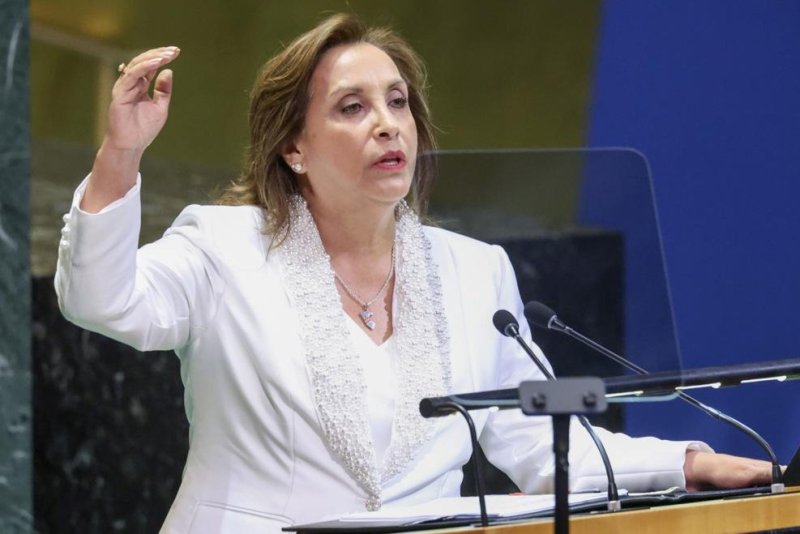
Peru Congress voted on October 10, 2025, to remove President Dina Boluarte from office, citing “permanent moral incapacity.” The decision followed weeks of political turmoil and public unrest over corruption scandals and rising crime across the country.
Boluarte, who came to power in December 2022 after the removal of former president Pedro Castillo, was ousted following an overwhelming vote in Congress. Lawmakers voted 124 in favor of her removal, with none opposing. The vote came after Boluarte failed to appear before Congress to defend herself against the allegations.
Following her dismissal, José Jerí, the president of Congress, was sworn in as interim president. His appointment follows Peru constitutional line of succession, as Boluarte had no vice president. Jerí, 38, now faces the daunting challenge of restoring stability and leading the country toward the next general election, scheduled for April 2026.
Boluarte presidency had been under constant pressure since she took office. Her government faced accusations of corruption, misuse of public funds, and failure to curb escalating violence. Peru has experienced one of the highest crime surges in its modern history, with more than 6,000 homicides recorded between January and August 2025 and widespread reports of extortion and organized gang activity.
The president approval rating plummeted to record lows-polling between 2 and 4 percent-amid criticism over her handling of protests, security issues, and an investigation involving undeclared luxury watches and property assets. Boluarte also faced repeated impeachment attempts before this final successful vote, reflecting growing frustration across party lines and within the general population.
Public confidence in the government had been eroded by months of unrest, with demonstrators demanding her resignation and early elections. Several human rights groups also criticized her administration for excessive use of force during earlier protests that resulted in civilian casualties.
Analysts say Boluarte’s removal underscores the deep instability that has plagued Peru’s political system for years. Since 2018, the country has seen six presidents, each toppled by impeachment, resignation, or scandal. The rapid turnover of leadership has weakened public institutions and damaged investor confidence.
Interim President José Jerí has promised to restore public order and begin national consultations ahead of the 2026 election. He urged all political parties to “prioritize the nation’s stability and unity” and assured citizens that his administration will respect democratic processes.
Despite the transition, uncertainty remains high. Peru continues to grapple with widespread poverty, inequality, and a pervasive lack of trust in government. For many Peruvians, Boluarte removal offers little assurance of change but rather marks another chapter in the country’s ongoing cycle of political upheaval.