
In the aftermath of months of devastation, Gaza stands at a crossroads. Amid a fragile ceasefire, residents are beginning the slow and painful process of clearing debris, uncertain of what the future holds. Streets once filled with life now lie buried under mountains of rubble, twisted metal, and memories of homes that no longer exist.
For many Gazans, survival has replaced hope. “This was my home,” says Abu Iyad Hamdouna, pointing to a heap of broken concrete in Sheikh Radwan, one of Gaza City’s hardest-hit neighborhoods. “There’s nothing left. Rebuilding will take years—maybe decades.”
The United Nations estimates that the destruction has reached a staggering cost of £53 billion (US$70 billion), with more than 300,000 homes damaged or destroyed. Clearing an estimated 60 million tonnes of debris is the first of many monumental tasks.
ALSO READ: Over 50 Injured as Explosions Hit Mosque Inside Jakarta High School Complex
Rising from the Rubble: Local vs. Foreign Visions
While bulldozers work to reclaim Gaza’s streets, political and economic powers are drafting competing blueprints for its reconstruction. The question of who will lead and who will benefit has become a global contest.
At the heart of Gaza, local leaders are promoting the Phoenix of Gaza, a homegrown initiative designed by a coalition of 700 Palestinian engineers, architects, and urban planners. Developed without Hamas’s political involvement, the plan envisions a modern yet locally rooted Gaza that preserves social and cultural continuity.
“We wanted to fill the vacuum,” explains Yara Salem, a former World Bank manager involved in the project. “You cannot rely on externally imposed plans that ignore the identity and reality of the people who live here.”
Foreign Blueprints: The “Gaza Riviera” and Beyond
In stark contrast, several foreign-backed proposals have emerged.
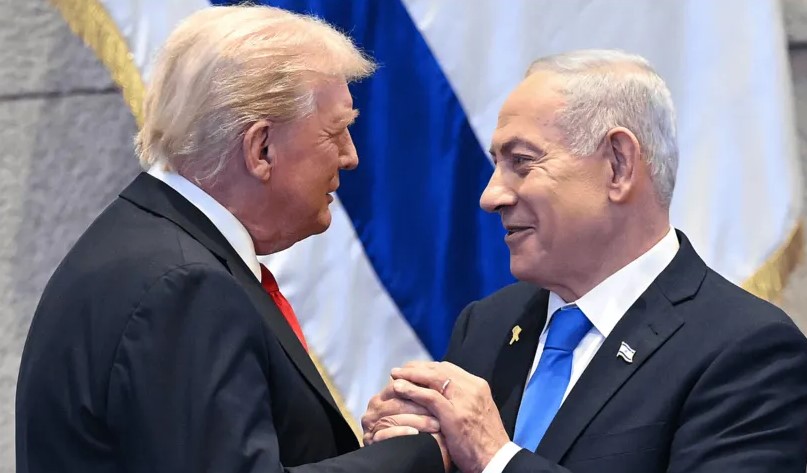
Among the most high-profile is the “Gaza Riviera”, mentioned by former U.S. President Donald Trump, who once suggested that Gaza’s coastline could be transformed into a luxury hub. His administration’s 20-point proposal included a “Board of Peace” to oversee rebuilding, possibly chaired by international figures such as former UK Prime Minister Tony Blair.
Another concept, leaked in August, proposed a US-administered “smart city” initiative—known as the Gaza Reconstitution, Economic Acceleration and Transformation Trust (GREAT). The plan outlined AI-powered cities and even included controversial references to “voluntary relocation” for portions of the population.
Analysts have criticized these visions as unrealistic and exploitative. “Such plans open the door to economic opportunism at the expense of Gaza’s sovereignty,” warns Raja Khalidi of the Palestine Economic Policy Research Institute. “Reconstruction must reflect Palestinian priorities—not serve outside interests.”
Balancing Heritage and Modernization
Other stakeholders have introduced their own ideas.
The Arab League’s five-year reconstruction framework, supported by Egypt, emphasizes the inclusion of Gazans in decision-making to promote local ownership. Meanwhile, the Palestinian Authority (PA) aims to reconnect Gaza and the West Bank under a single national plan, ensuring that community structures particularly those tied to refugee identity are not erased.
“Seventy percent of Gaza’s population are refugees,” notes Estephan Salameh, the PA’s planning minister. “Reconstruction must preserve that identity while improving living standards. We want to restore communities, not erase their history.”
A Long, Painful Road Ahead
Experts agree that rebuilding Gaza will not happen overnight. Shelly Culbertson of the RAND Corporation calls the process “incremental urbanism” a gradual rebuilding effort that allows residents to return and restore their neighborhoods bit by bit.
This is not a five-year project,” she says. “It could take decades. The goal is to rebuild with dignity, preserving Gaza’s soul rather than replacing it.
However, until political stability and secure funding are achieved, even small-scale recovery remains uncertain. Egypt’s proposed donor summit has yet to take place, while investors in the Gulf demand guarantees that future conflict will not destroy what they finance.
For now, life continues among the ruins. Back in Sheikh Radwan, Abu Iyad sets up a makeshift tent beside the remains of his home. “They talk of plans and cities,” he says quietly. “But we just need water and a place to stay.